Dental Implants Sydney

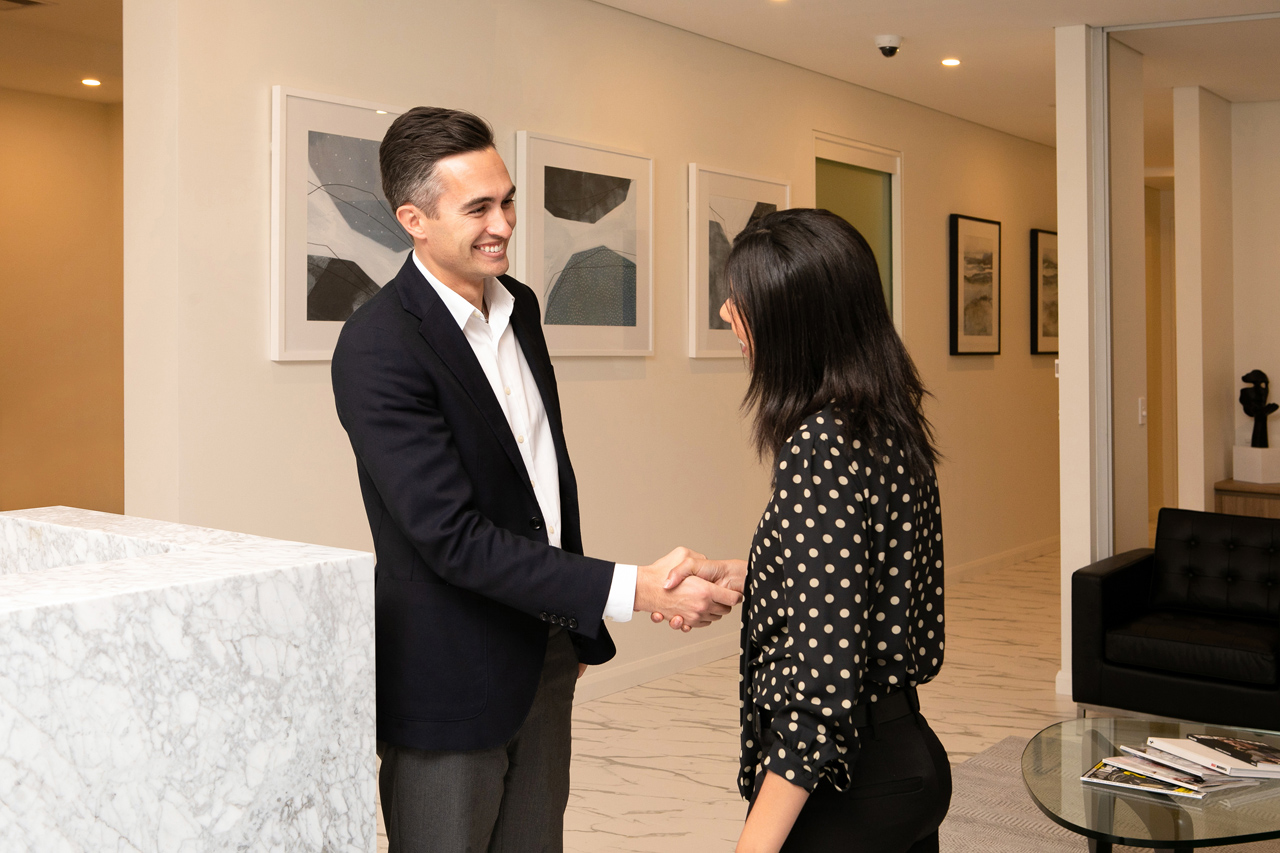
Oral & Maxillofacial Surgeon Dr Kristian van Mourik has the highest level of surgical qualifications and expertise in Dental Implant Surgery Sydney.

Oral & Maxillofacial Surgeon Dr Kristian van Mourik has the highest level of surgical qualifications and expertise in Dental Implant Surgery Sydney.

Contact Us

Call Us:

Locations

With more than 16 years of specialist practice, Dr van Mourik is a sought-after educator who teaches dentists advanced dental implant surgery through courses across Australia and internationally.

Our practice specialises in single, multiple and full arch dental implant surgery, as well as a wide range of Oral & Maxillofacial Surgery in Sydney. 

What Are Dental Implants?

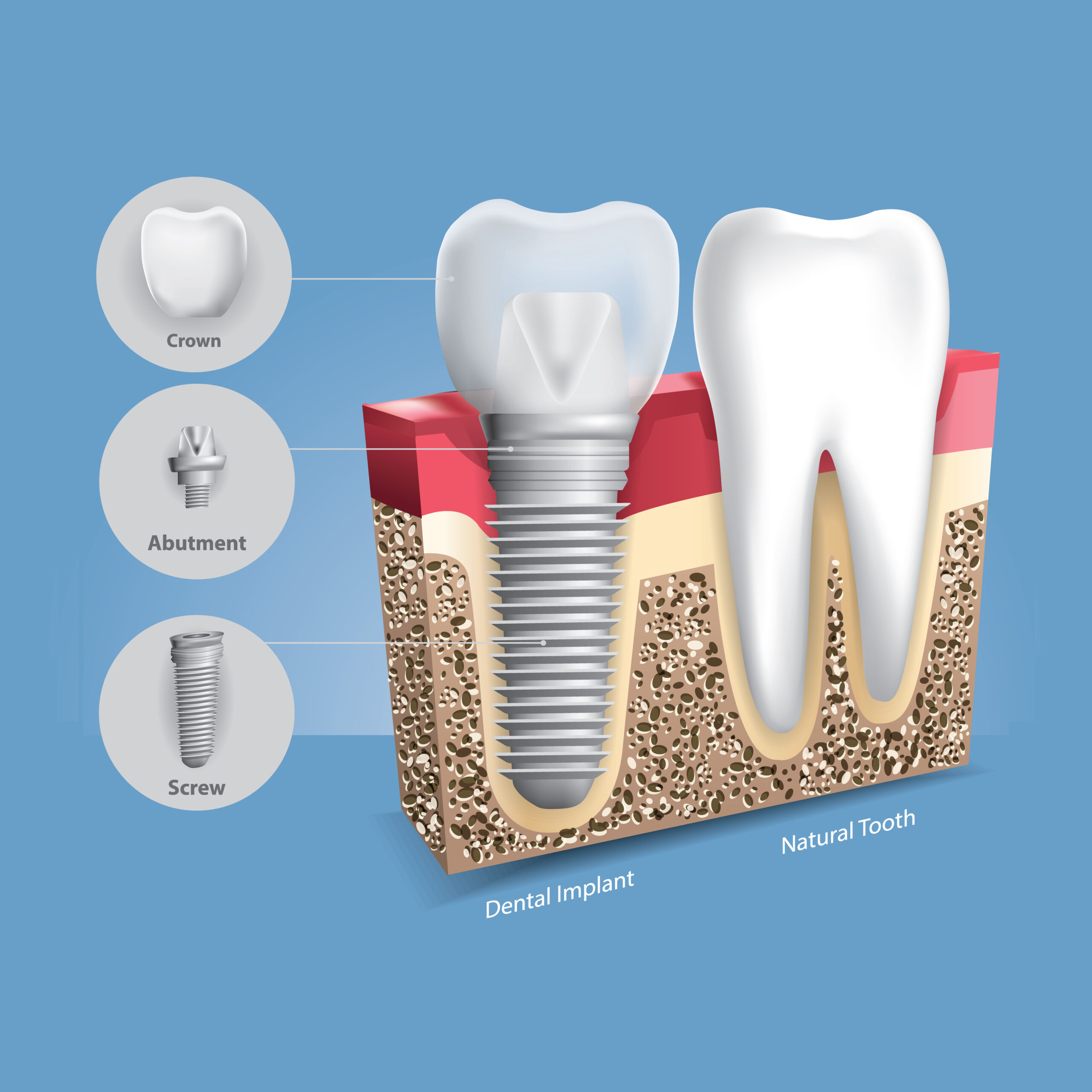
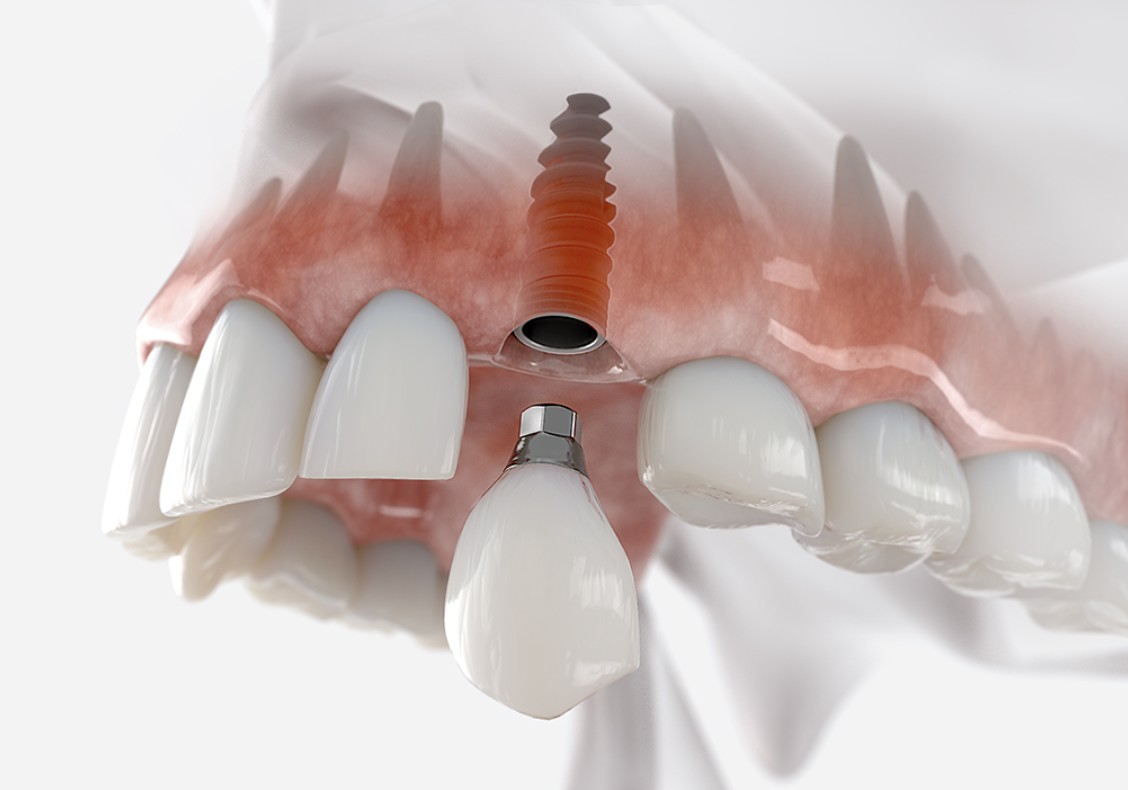
A dental implant is a titanium fixture placed into the jawbone to replace a missing tooth. Over time, the jawbone heals around the implant in a process called osseointegration, creating a strong foundation for a replacement tooth.

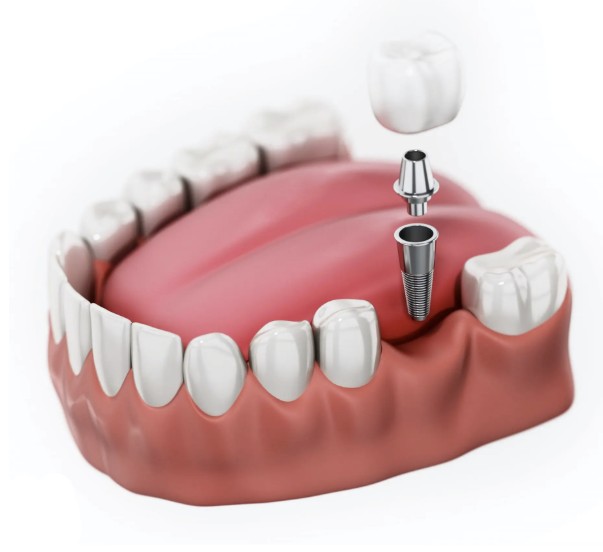
Once the implant has integrated with the bone, a connector called an abutment is attached. A custom-made crown is then placed on top to replace the visible part of the missing tooth. Implants are designed to look, feel and function like a natural tooth. For patients missing multiple teeth, implants can support a bridge or a full arch restoration.

Dental implants can be used to replace:

  • One missing tooth
  • Several missing teeth
  • A full upper jaw of teeth
  • A full lower jaw of teeth
  • Loose or unstable dentures


Why See a Specialist Oral and Maxillofacial Surgeon for Dental Implants?

Dental implant surgery requires advanced surgical skill, careful planning and a thorough understanding of jaw anatomy and medicine.

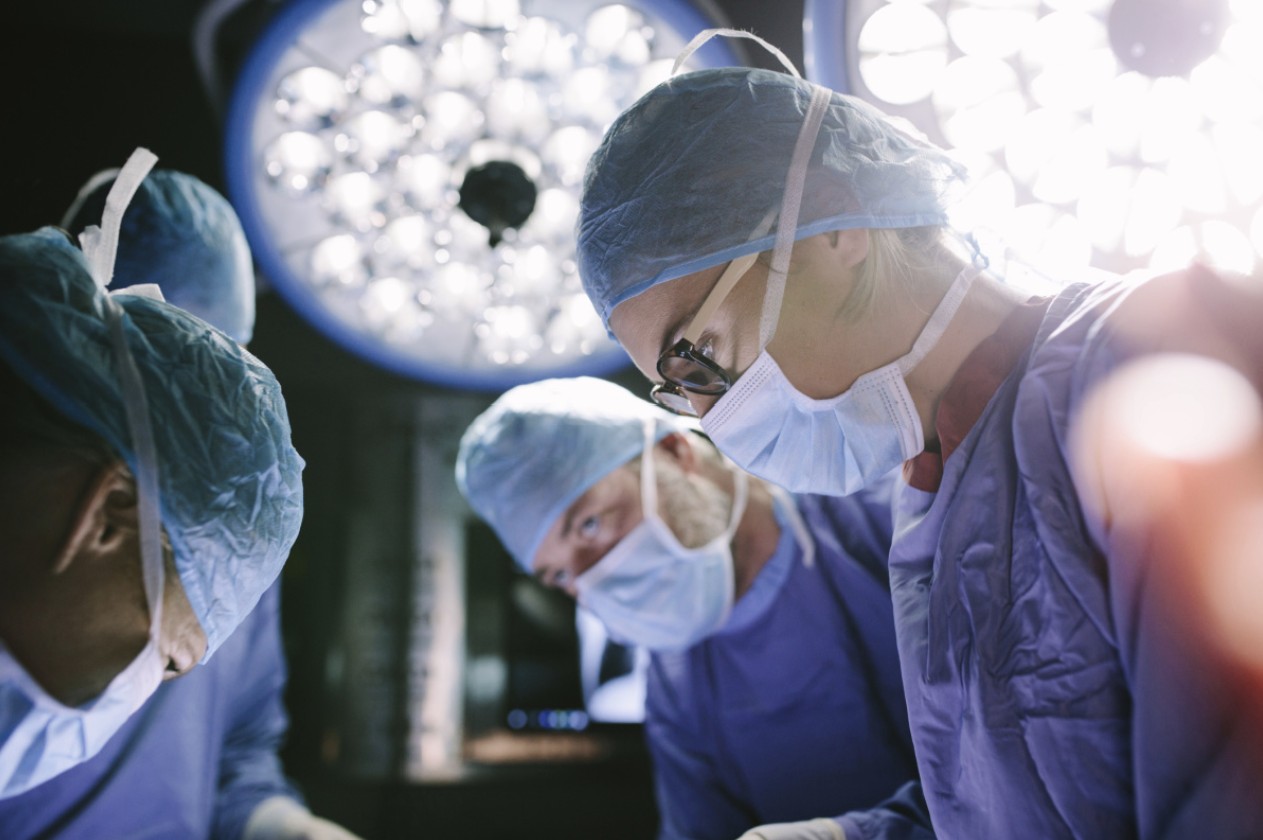
An Oral & Maxillofacial Surgeon (OMS) is the most highly trained specialist in dental implant surgery. Dr Kristian van Mourik combines medical, dental and specialist surgical training to provide safe, predictable dental implant treatment, including complex cases involving bone loss.

Is a Specialist Better for Dental Implants?

Yes. An Oral & Maxillofacial Surgeon completes both dental and medical degrees, followed by specialist surgical training accredited by the Royal Australasian College of Dental Surgeons (RACDS).

This unique training allows Dr Kristian van Mourik to manage routine and complex dental implant cases with a focus on precision, safety and long-term results.

Advanced Surgical Expertise

Dental implant placement requires precision around important structures such as nerves and sinuses. Dr van Mourik’s specialist surgical training supports careful planning and accurate implant placement

Faster Recovery

Specialist surgical expertise can mean less tissue trauma, more precise implant placement and a faster, smoother recovery.

Reduced Risk of Complications

Specialist assessment and surgical expertise help minimise risks such as implant failure, infection, nerve injury and sinus complications.

Private Hospital Care

Unlike many tooth implant providers, Dr Kristian van Mourik performs All-on-4 surgery in an accredited private day hospital. Patients benefit from a fully equipped surgical environment that provides the highest standards of safety, sterility, and patient care.

Specialist Anaesthetic Care

When required, general anaesthesia is only provided by a specialist anaesthetist with the highest level of recognised training in anaesthesia (FANZCA).

Experienced in Complex Cases

Dr van Mourik manages complex implant cases, including patients with bone loss or multifactorial medical conditions. He is very experienced in in advanced procedures such as bone grafting, sinus lifts and zygomatic implants.

Improved Long-Term Success

Careful diagnosis, planning and specialist surgical expertise help achieve natural-looking, function and long-lasting results.

What to Consider Before Getting Dental Implants

Dental implants can be an effective, long-term solution for replacing missing teeth, but they are not suitable for every patient. A careful assessment is essential to determine whether implants are the right option and how treatment should be planned.

Before recommending dental implants, Dr Kristian van Mourik will assess:

  • Jawbone health and volume – Sufficient healthy bone is needed to support an implant. Bone grafting may sometimes be required if bone loss has occurred.
  • Gum health and oral hygiene – Healthy gums are important for successful healing and long-term implant stability.
  • Bite and tooth function – Your bite is assessed to ensure the implant restoration functions comfortably and effectively.
  • Medical history and anatomy – Your health, medications, and the position of important structures such as nerves and sinuses are carefully considered.

Using advanced imaging and surgical planning, Dr van Mourik creates a personalised treatment plan to achieve safe, precise implant placement and long-term results.

A detailed consultation allows you to understand your options, the treatment process and what to expect before proceeding.


Pros and Cons of Dental Implants

Understanding the advantages and considerations of dental implants can help you make an informed decision about your tooth replacement options

Benefits of dental implants

  • Replace one or more missing teeth with a fixed option.
  • Improve chewing function.
  • Support the jawbone where a tooth has been lost.
  • Avoid relying on neighbouring teeth for support.
  • Improve denture stability in selected cases.
  • Support a crown, bridge or full arch restoration.
  • Restore function in a way that feels more stable than a removable denture.
Considerations
  • It involves a surgical procedure.
  • Healing time is needed before the final crown, bridge or restoration is fitted.
  • Bone grafting may be required if there is not enough jawbone.
  • Upper jaw implants may need planning around the sinus.
  • Lower jaw implants need planning around nearby nerves.
  • Smoking, gum disease and some medical conditions can affect healing.
  • Ongoing cleaning and maintenance are needed to protect the implant and surrounding gum.

Types of Dental Implant Options

The right dental implant treatment depends on how many teeth are missing, where they are located, how much jawbone is available, and what type of final tooth replacement is required.

Single Tooth Implant

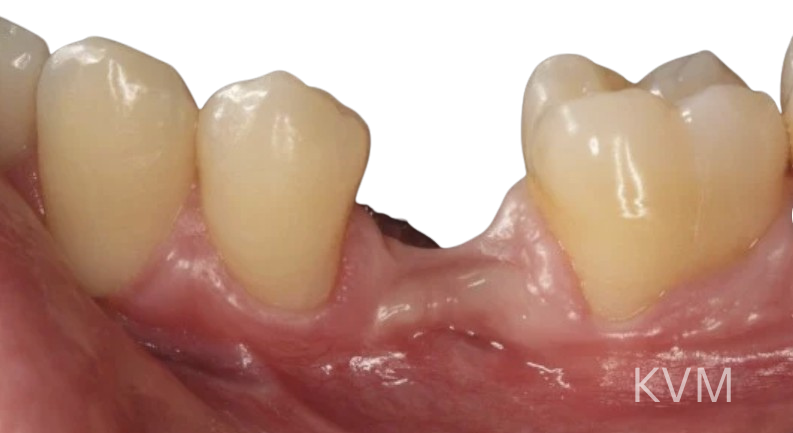
A single tooth implant may be suitable when one tooth is missing or needs to be removed. The implant replaces the missing tooth root and supports a custom-made crown. This can restore the missing tooth without relying on the teeth on either side for support.
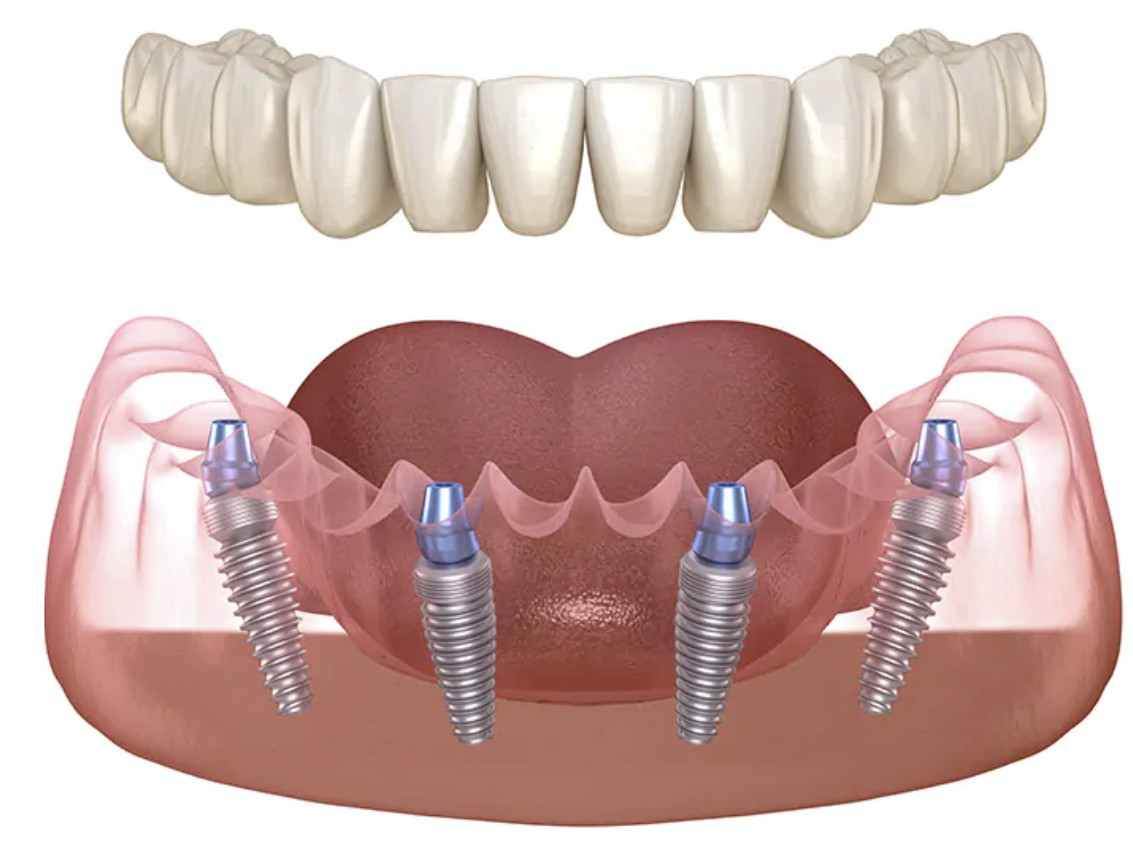
All-on-4 Dental Implants

All-on-4 dental implants are a full arch treatment option where a fixed bridge is supported by a smaller number of implants. This may be suitable for some patients who are missing all or most of their teeth. Dr van Mourik will assess whether All-on-4 is appropriate or whether another full arch implant option is better suited to your case.
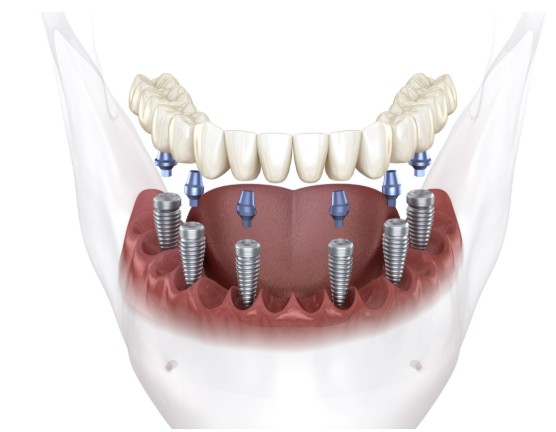
Full mouth dental implants

Ideal for patients missing all or most teeth in both jaws with good bone density. Full jaw dental implants use up to eight implants per jaw, placed vertically, for a strong and permanent full mouth restoration. Dr. Kristian van Mourik offers full mouth dental implants in Sydney as part of a comprehensive treatment plan.
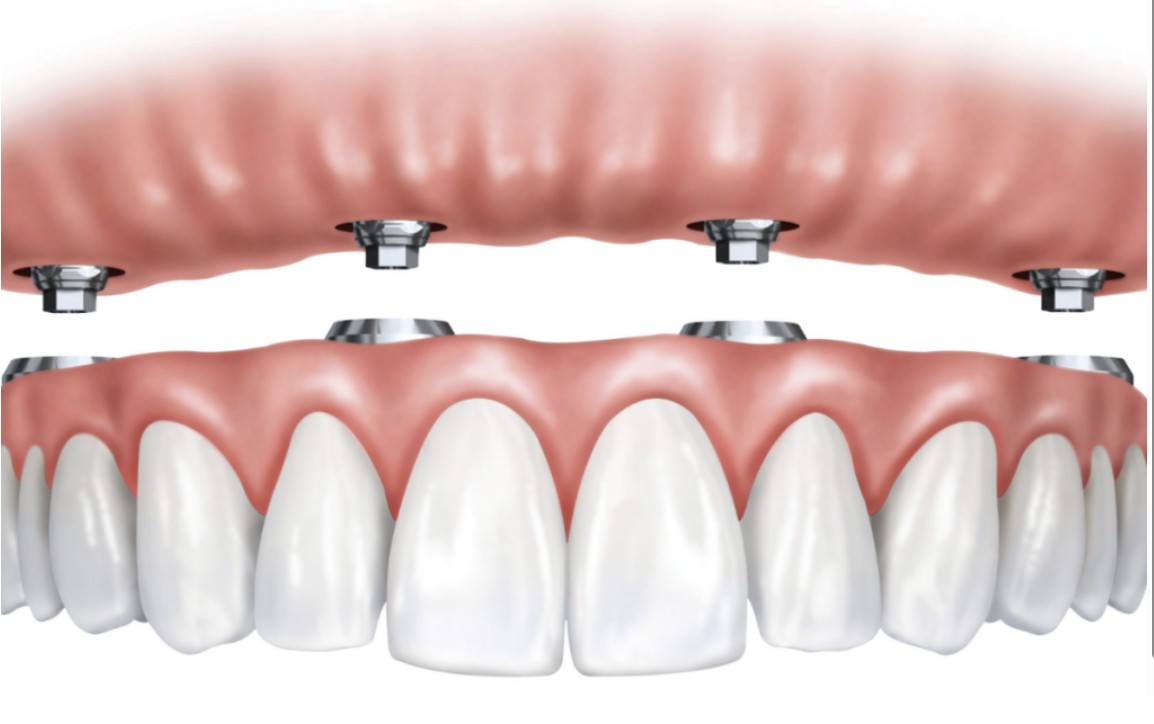
Implant-Supported Dentures

A removable option that still feels stable and secure. Usually supported by two titanium implants at the front of the jaw. Dentures snap on and off, giving flexibility and confidence.
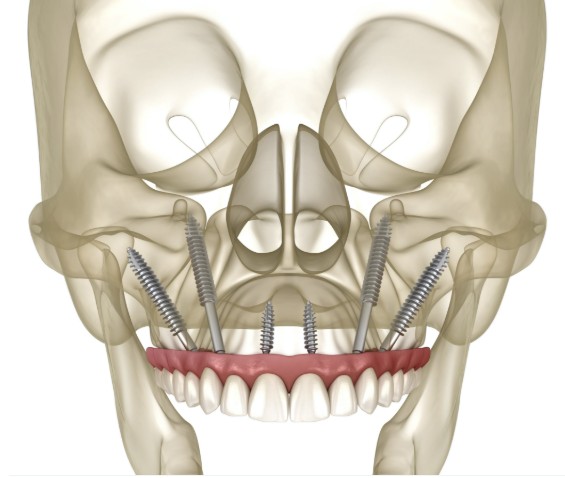
Zygomatic Dental Implants

For patients with severe upper jaw bone loss who want to avoid bone grafts or sinus lifts. Longer implants (30–55mm) are anchored into the cheekbone (zygoma). Provides excellent stability and results when performed by a skilled surgeon.
What to Expect Before and After Dental Implant Surgery

Before Dental Implant Surgery

Before surgery, Dr Kristian van Mourik will complete a thorough assessment to determine if dental implants are suitable for you.

This may include:

  • Dental examination to assess your teeth, gums and bite.
  • X-rays and 3D CBCT imaging to evaluate bone volume, bone quality, sinus position and nearby nerves.
  • Treatment planning to determine if additional procedures, such as bone grafting or sinus lift surgery, are required.

Dr van Mourik will explain your personalised treatment plan, including the expected timeline, surgical process and the type of restoration recommended, such as a dental crown, bridge or full arch implant teeth.

After Dental Implant Surgery

After implant surgery, most patients experience some swelling, tenderness and mild discomfort during the early healing period.

Common recovery experiences include:

  • Mild swelling and bruising for the first few days.
  • Discomfort that is usually manageable with simple pain relief such as Nurofen® and Panadol®.
  • A gradual healing process as the implant integrates with the jawbone.

The implant typically requires several months to fully integrate with the bone before the final crown, bridge or full arch restoration is fitted.

Dr van Mourik will provide personalised post-operative instructions and follow-up care to support a safe recovery and successful implant outcome.

Dental Implant Process Step by Step

Dental implant surgery in Sydney requires careful planning and coordination between the surgeon, the patient and, in many cases, the referring dentist who completes the final crown or restoration.

At your first appointment, Dr van Mourik will assess your teeth, gums, jawbone and medical history.

Imaging may be used to assess bone volume, bone density, sinus position and nearby nerves. You will also have the opportunity to ask questions and discuss your goals.

If dental implants are suitable, the implant position is planned around your jawbone, bite and final restoration.

This stage is important because the implant needs to be placed in a position that supports both surgical stability and the final tooth replacement.

The titanium implant is placed into the jawbone during a surgical procedure.

Some dental implant procedures can be performed under local anaesthetic. More complex cases, or patients who prefer not to be awake for treatment, may be treated under sedation or general anaesthetic where appropriate.

After placement, the implant needs time to heal and integrate with the jawbone. This process is called osseointegration.

The healing time can vary depending on your health, the quality of the bone, the number of implants placed and whether bone grafting was required.

Once healing is complete, the final crown, bridge or full arch restoration can be fitted.

In many cases, your referring dentist will complete this stage. Dr van Mourik works closely with referring dentists to support a coordinated treatment plan.

Dental implants require ongoing care. Regular reviews, professional cleans and daily oral hygiene are important for the health of the implant, gum and surrounding teeth.


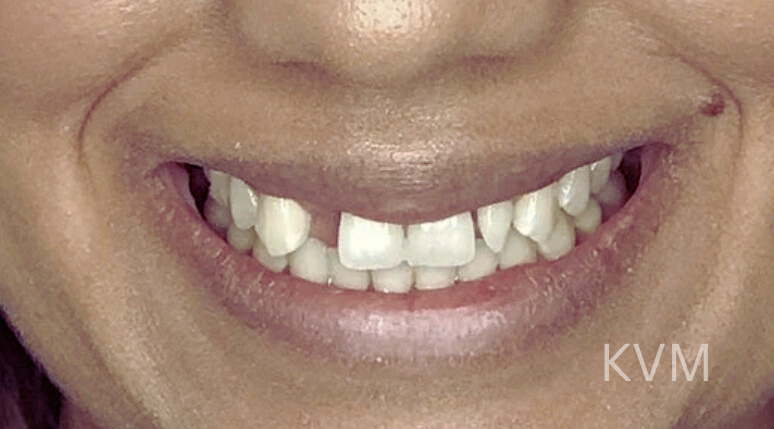
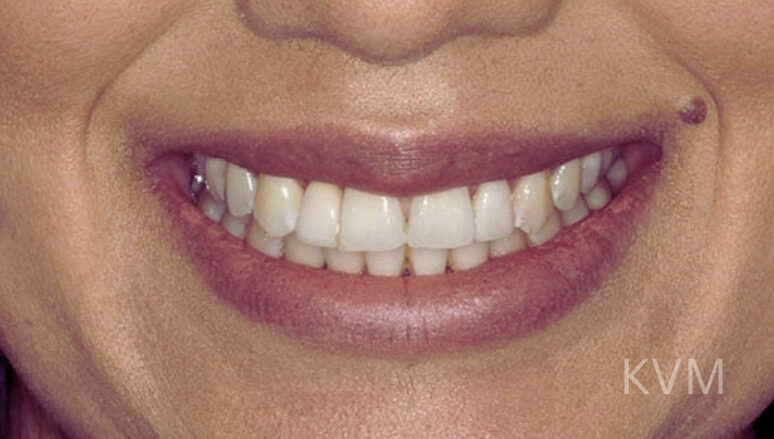
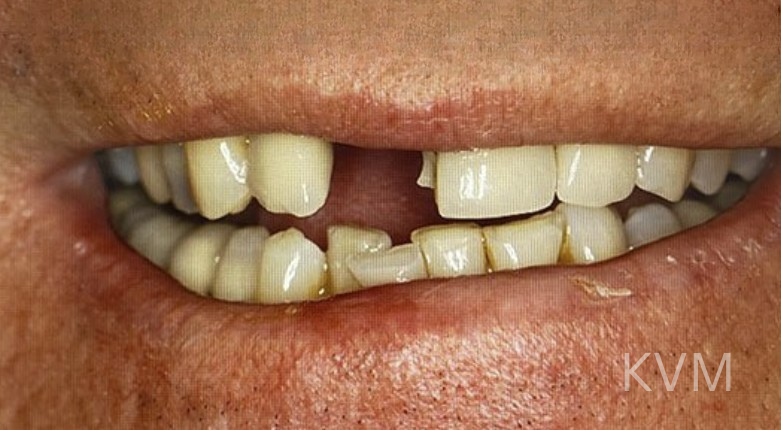
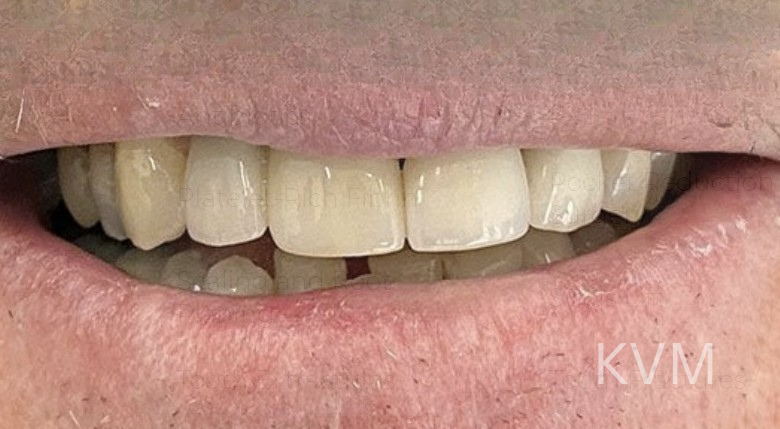
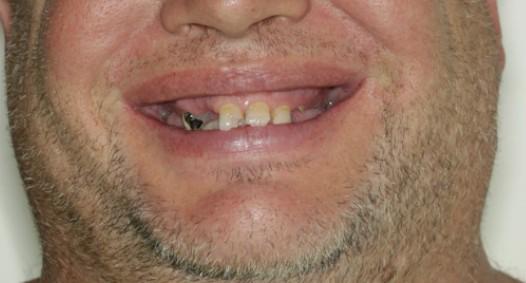
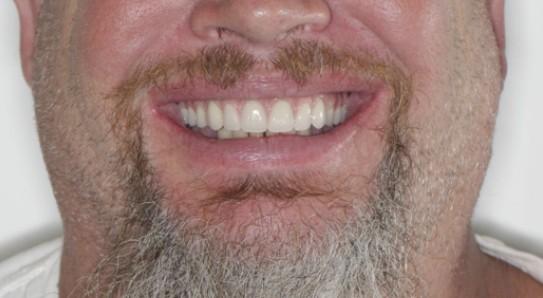
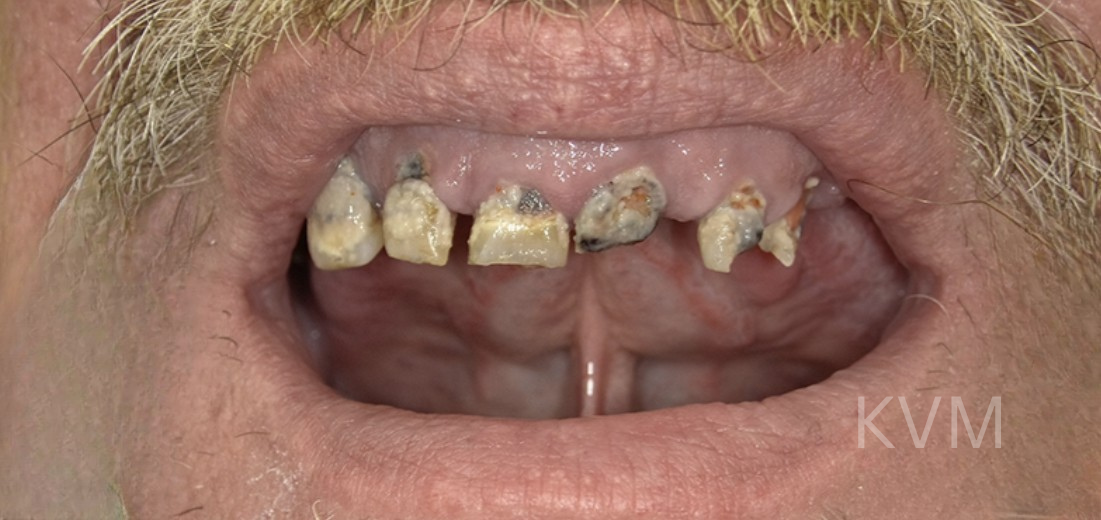
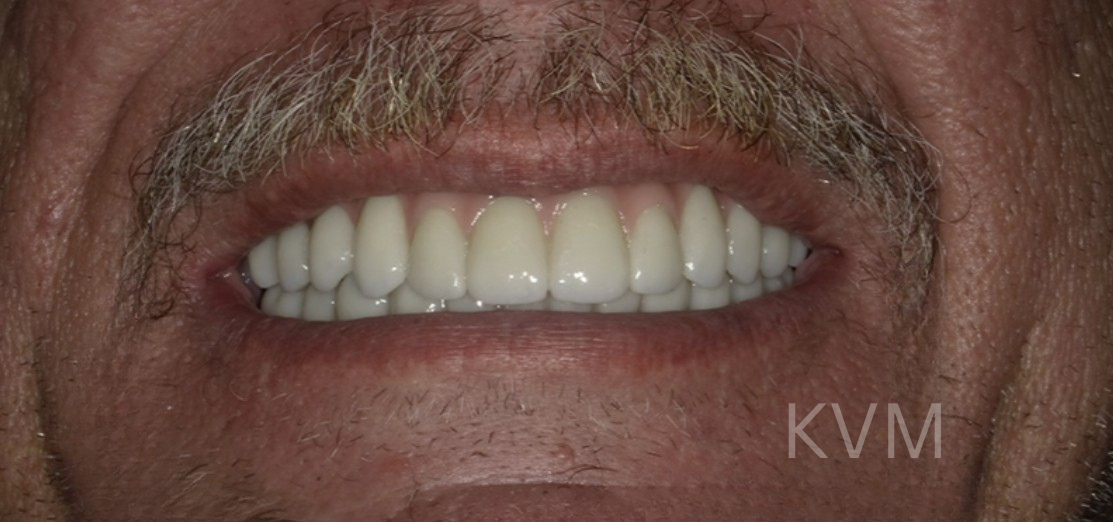
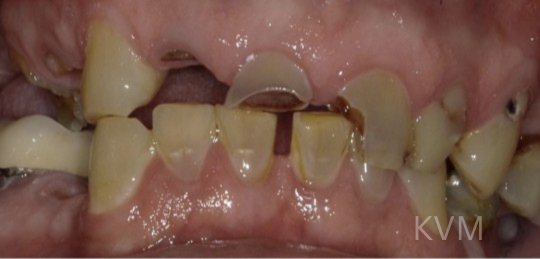
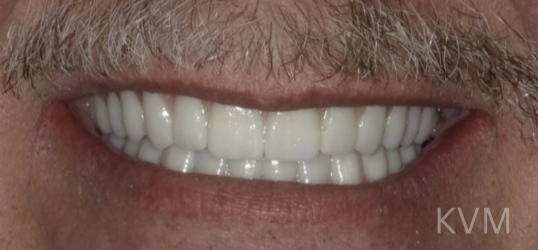
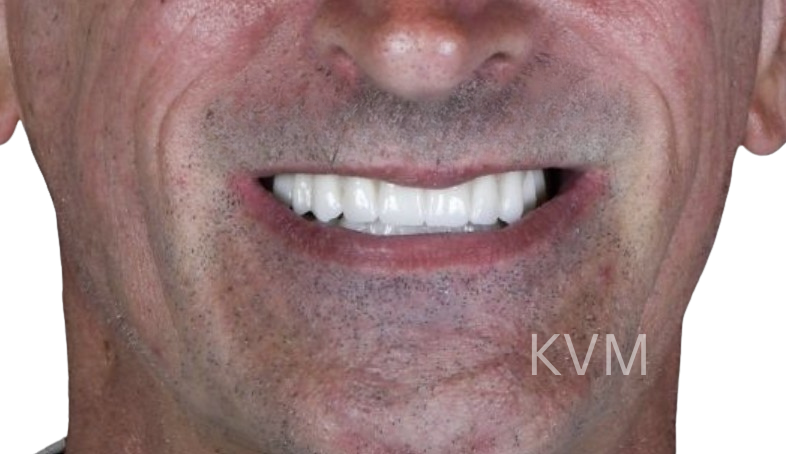
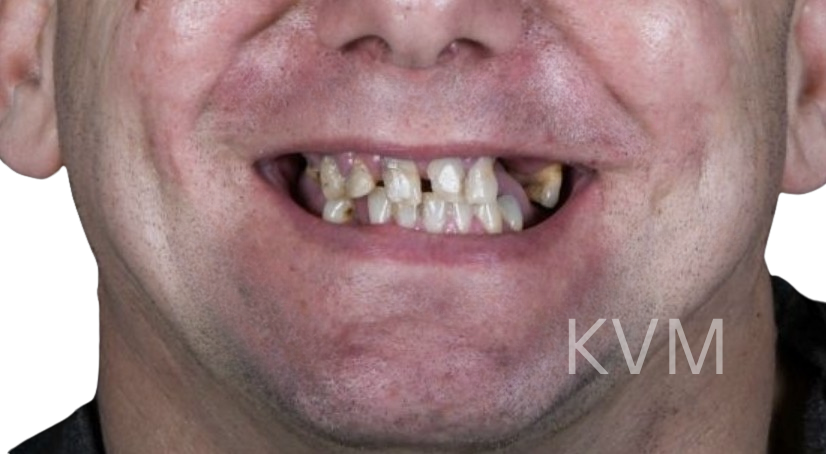
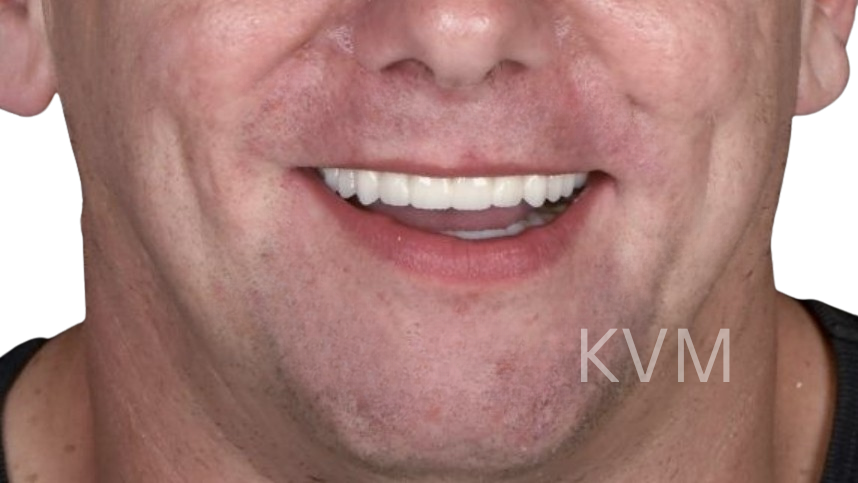
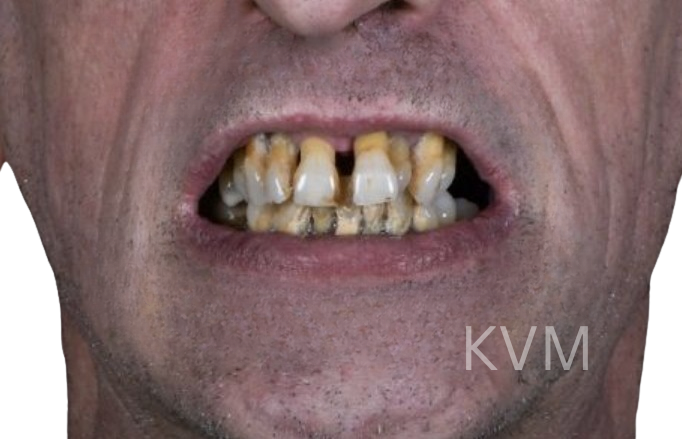
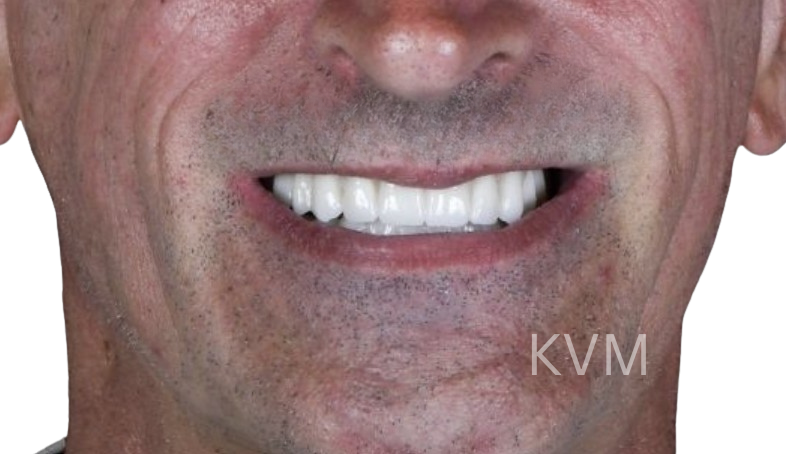
Before and After Results of Dental Implants

Recovery After Dental Implant Surgery

Recovery after dental implant surgery depends on the number of implants placed, whether bone grafting was required, type of anaesthetic used and the experience of your surgeon.

Dr van Mourik will give you detailed post-operative instructions during your initial consultation. To maximise your chance of making a quick recovery without complications, please pay careful attention to these instructions

Getting Home

If you’ve general anaesthetic or IV sedation you will require someone to assist you get home. If done under local anaesthetic, you can drive home yourself

Pain and Swelling

Some swelling, tenderness and mild discomfort are common after dental implant surgery. These can usually be managed with simple pain relief such as Nurofen® and Panadol®, along with ice packs to reduce swelling. Dr van Mourik will provide personalised post-operative advice.

Work and Normal Activities

Many patients return to work within a few days, but this depends on the complexity of the surgery, your general health and the type of work you do.

Stitches

Dissolving stitches are used in most cases. They gradually dissolve over 1-2 weeks.

Food and Diet

Soft food diet for a few days after surgery. By 1-2 weeks after surgery you’ll most likely be eating and drinking normally.

Follow-Up

Follow-up care is arranged to check healing and support your recovery.


How to Look After my Dental Implant

Dental implants need regular care, just like natural teeth.

To help maintain your implant:

  • Brush twice daily with a soft toothbrush or electric toothbrush.
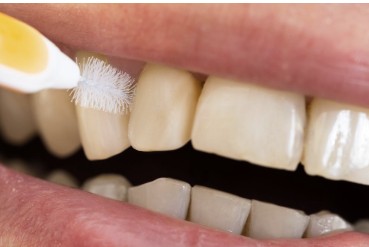
  • Clean between the teeth with floss, interdental brushes or a water flosser.
  • Attend regular dental reviews and professional cleans.
  • Follow the cleaning advice given by your dentist or hygienist.
  • Avoid smoking, as it can affect healing and implant health.
  • Report pain, swelling, bleeding or looseness early.

The crown, bridge or prosthetic teeth attached to dental implants may need maintenance or replacement over time, even when the implant itself remains stable.

How Long Do Dental Implants Last?

Dental implants are designed as a long-term tooth replacement option, but their lifespan depends on several factors. These include your oral hygiene, gum health, bone health, bite forces, smoking status, medical history and regular dental maintenance.

The implant fixture may remain stable for many years when the surrounding bone and gum stay healthy. The crown, bridge or prosthetic teeth attached to the implant may need maintenance or replacement over time.

Regular reviews with your dentist or hygienist are important to help protect the implant and identify problems early.


Dental Implant Cost in Sydney

The cost of dental implants in Sydney varies depending on your individual needs, including:

  • Number of implants required
  • Complexity of your case
  • Jawbone condition and whether bone grafting is needed

As an experienced oral and maxillofacial surgeon, Dr Kristian van Mourik manages both routine and complex dental implant cases, providing personalised specialist care ensuring affordable dental implant treatment. 

You will receive a detailed, itemised quote to check available rebates with your healthfund and medicare. If your procedure is performed under general anaesthesia in hospital, anaesthetist fees will be provided separately.

Flexible finance options are available, making it easier to access the highest standard of care while keeping your dental implant treatment affordable.

Medicare covers part of the initial consultation, certain surgical and anaesthetic item numbers. Private health insurance may contribute to hospital, surgical and anaesthetist fees. You will receive an itemised quote that can be submitted to your private health fund and medicare to check available rebates.

Meet Dr Kristian van Mourik

Qualifications:
BBioMed, BDSHons, MBBS, FRACDS OMS

His academic background includes:

  • Bachelor of Biomedicine, Monash University.
  • Bachelor of Dentistry with Honours, University of Sydney.
  • Bachelor of Medicine / Bachelor of Surgery, University of Sydney.
  • Fellowship in Oral and Maxillofacial Surgery.

Dr van Mourik treats patients across a range of Oral and Maxillofacial procedures, including dental implants, bone grafting, corrective jaw surgery, facial trauma, oral pathology and other conditions of the mouth, jaw and face.

He is registered with both the Medical Board of Australia and the Dental Board of Australia as a specialist Oral and Maxillofacial Surgeon.

2

Convenient locations
across Sydney

120+

Verified Google Reviews
From our patients

120+ Google Reviews
Trusted by Hundreds of Patients Across Sydney

Dr Kristian Van Mourik Associations & Accreditations

Monash University logo
Australian & New Zealand Association of Oral & Maxillofacial Surgeons Sydney logo
IAOMS Member - International Association of Oral & Maxillofacial Surgeons logo
Royal Australasian College of Dental Surgeons
American Association of Oral & Maxillofacial Surgeons Sydney Member
University of Sydney logo

Dental Implants FAQs

An Oral and Maxillofacial Surgeon is the most highly trained specialist for dental implants. Dr. Kristian van Mourik is a dual-qualified doctor and dentist with over 18 years of experience in dental implant surgery in Sydney, and is widely regarded among referring practitioners as one of the best dental implant specialists available.

Dental implants are suitable for patients of nearly all ages. In rare cases, certain medical conditions may affect the procedure, but your suitability will always be carefully assessed before treatment begin
During your consultation, Dr. Van Mourik will discuss the advantages and disadvantages of tooth implants Sydney and evaluate whether you are a suitable candidate for the procedure

Most adults with missing teeth are candidates for dental implants in Sydney. Patients with insufficient bone may require dental bone grafting before implant placement. Medical conditions such as uncontrolled diabetes or current smoking can affect healing. Dr. Kristian van Mourik will assess your suitability at your consultation.

Leaving a gap in your mouth from a missing tooth can lead to significant issues. Surrounding teeth may shift out of alignment, resulting in crooked teeth or unsightly gaps in your smile. If teeth are missing your chewing forces are not evenly distributed around your mouth, this can lead to gum disease, jaw joint paint, excessive wear and fracture of existing teeth and even further tooth loss. Additionally, the presence of teeth provides stimulation to your jaw bone,  lack of jawbone stimulation can result in bone loss over time, this will change your appearance and can lead to a hallowing, aged appearance.  

Tooth implants in Sydney offer a reliable solution to restore your smile and prevent these problems, providing a stable and lasting foundation.

Tooth implants in Sydney have been a trusted solution for many years. When performed by an Oral and Maxillofacial Surgeon the dental implant procedure is safe.
With proper care, dental implants can last a lifetime, much like natural teeth. To ensure their longevity, it’s essential to follow care instructions and attend regular maintenance appointments for your tooth implants in Sydney.

Dental implant cost in Sydney varies depending on the number of implants, procedure complexity, and whether bone grafting is required. Medicare covers part of the consultation and certain surgical item numbers. Private health insurance may contribute to hospital fees. A full written quote is provided at your consultation.

Depending on your extras cover, private health insurance may pay for part of your dental implant treatment in Sydney. Coverage varies. We will provide you with an itemised quote so you can contact your insurer to confirm what’s included and whether waiting periods apply.
We can also discuss finance options and payment plans to help you access affordable dental implants Sydney.

Recovery usually takes 3–6 months. This can vary depending on your health, healing ability, and the complexity of your dental implant surgery in Sydney.
At your consultation, we’ll explain the best dental implant Sydney recovery care steps.

After your dental implant it’s best to avoid hot food and drinks while you’re still numb to prevent accidental burns. For the first few days, you should also avoid strenuous activity and hard foods to support proper healing. After this initial period, you can gradually return to your normal diet and activities.
During your appointment, we’ll discuss your best dental implant Sydney post-operation care tips and advice.

Wait until the local anaesthetic has fully worn off before eating. Avoid hot food and drinks, and try not to touch the implant site with your tongue or fingers. In the early stages, stick to soft foods to protect the area. Once the initial healing period of a couple of days has passed, you can gradually return to your normal diet and activities.
During your appointment, we’ll discuss the best dental implant Sydney post-operation care tips and advice tailored to your recovery.

Wait until the local anaesthetic has completely worn off before eating — if hungry, start with a cool smoothie. Once the numbness has passed, follow a soft diet for the first few days to weeks after implant surgery, then gradually reintroduce harder foods as healing progresses.
During your visit, we’ll review the best dental implant Sydney aftercare guidelines in detail.

Yes, you can brush your teeth carefully after dental implant surgery. Use a soft toothbrush and avoid brushing directly over the surgical area in the first few days.
In your appointment we will cover the best dental implant Sydney post-surgery care advice.

Dental implants don’t need extensive care. They can be maintained just like natural teeth — with daily brushing, flossing, and regular dental visits.
At your appointment, we’ll go over the best dental implant Sydney post-operative care guidelines.

We recommend having your dental implants checked and thoroughly cleaned by your dentist or hygienist every 3–6 months to ensure they stay healthy and secure.

Who is the best specialist for dental implants in Sydney?Yes, food can sometimes get trapped around implants. To protect your new dental implants, avoid sticky foods and regularly clean between your teeth every day with dental floss or interdental brushes to remove plaque and food particles

A tooth implant in Sydney can last a lifetime with proper care. The titanium implant itself typically stays stable for decades. The crown or bridge attached to the implant usually lasts 5 to 20 years depending on the material and how well oral hygiene is maintained.

Sydney Areas We Service for Dental Implants

Dental implant surgery available across Eastern Suburbs Sydney and North Shore Sydney
  • Bondi
  • Bronte
  • Clovelly
  • Coogee
  • Randwick
  • Paddington
  • Woollahra
  • Double Bay
  • Bellevue Hill
  • Tamarama
  • Waverley
  • Surrounding Eastern Suburbs
  • Roseville
  • Chatswood
  • Killara
  • Gordon
  • Pymble
  • Turramurra
  • St Ives
  • Wahroonga
  • Hornsby
  • Willoughby
  • Castle Cove
  • Other North Shore suburbs

2

Convenient locations
across Sydney

120+

Verified Reviews
From our patients

Trusted by Hundreds of Patients Across Sydney

Dr Kristian van Mourik has received over 120 verified Google reviews across his Lindfield and Bondi Junction clinics.

While Australian healthcare advertising regulations limit how patient reviews can be displayed on medical service pages, prospective patients are welcome to view independent feedback directly on Google.

This volume of reviews reflects years of specialist Oral and Maxillofacial surgical care, clear communication, and a consistent patient experience across both clinic locations.

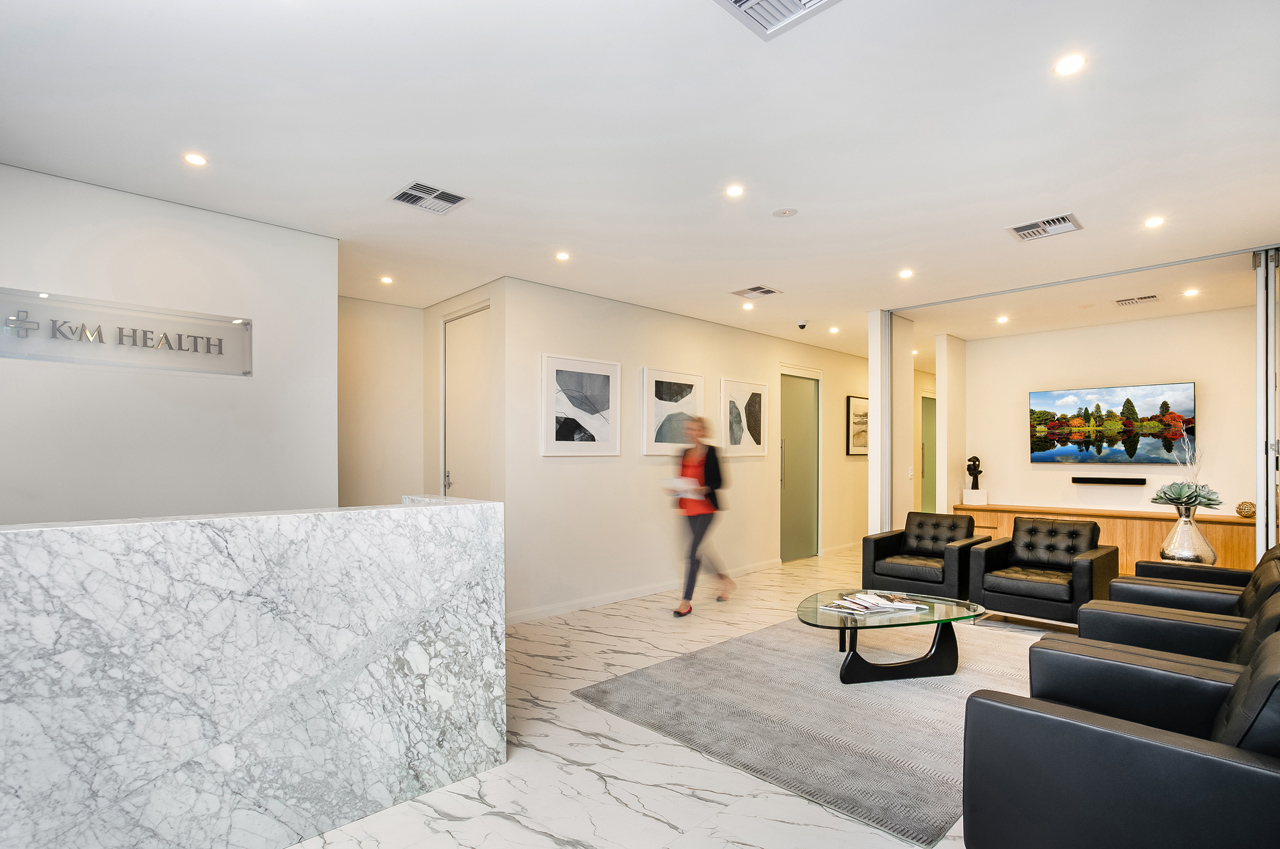
Our Sydney Clinics

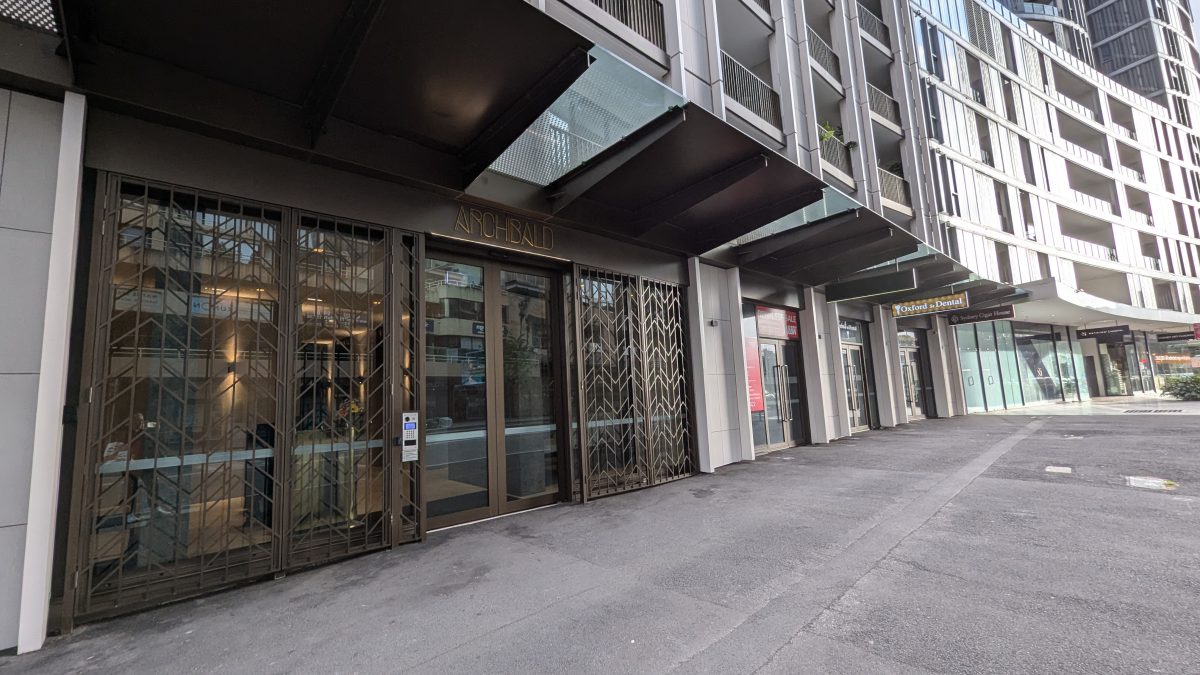
Bondi Junction Dental Implant Clinic

Address:

104/568 Oxford Street, Bondi Junction NSW 2022

Directions

Located in the heart of the Eastern Suburbs, our Bondi Junction clinic is easily accessible by train, bus, and nearby parking.

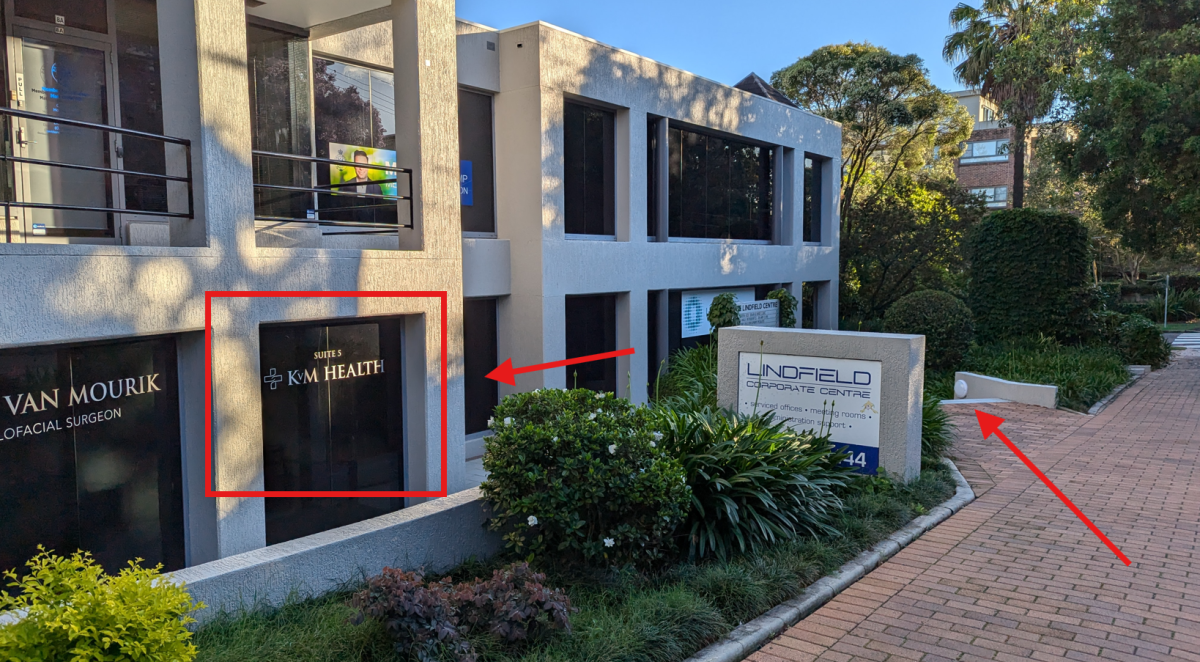
Lindfield Dental Implant Clinic

Address:

Suite 5, 12 Tryon Road, Lindfield NSW 2070

Directions

Conveniently positioned on the North Shore, our Lindfield clinic is close to public transport and offers parking options nearby.