
The real answer is a fascinating mix of evolution, diet, and modern lifestyle. Once upon a time, wisdom teeth were helpful, even necessary. But as our diets and jaw structures have changed, our mouths have become less able to accommodate these late-arriving molars and they have been not required like they used to be.
What Are Wisdom Teeth?
Wisdom teeth, or third molars, are the last set of teeth to erupt — typically between ages 17 and 25. Anthropologists believe these teeth evolved to help our ancestors chew coarse, fibrous foods such as roots, nuts, raw meats, and tough plants. Early humans needed serious chewing power, and wisdom teeth provided that extra bite force at the back of the mouth.
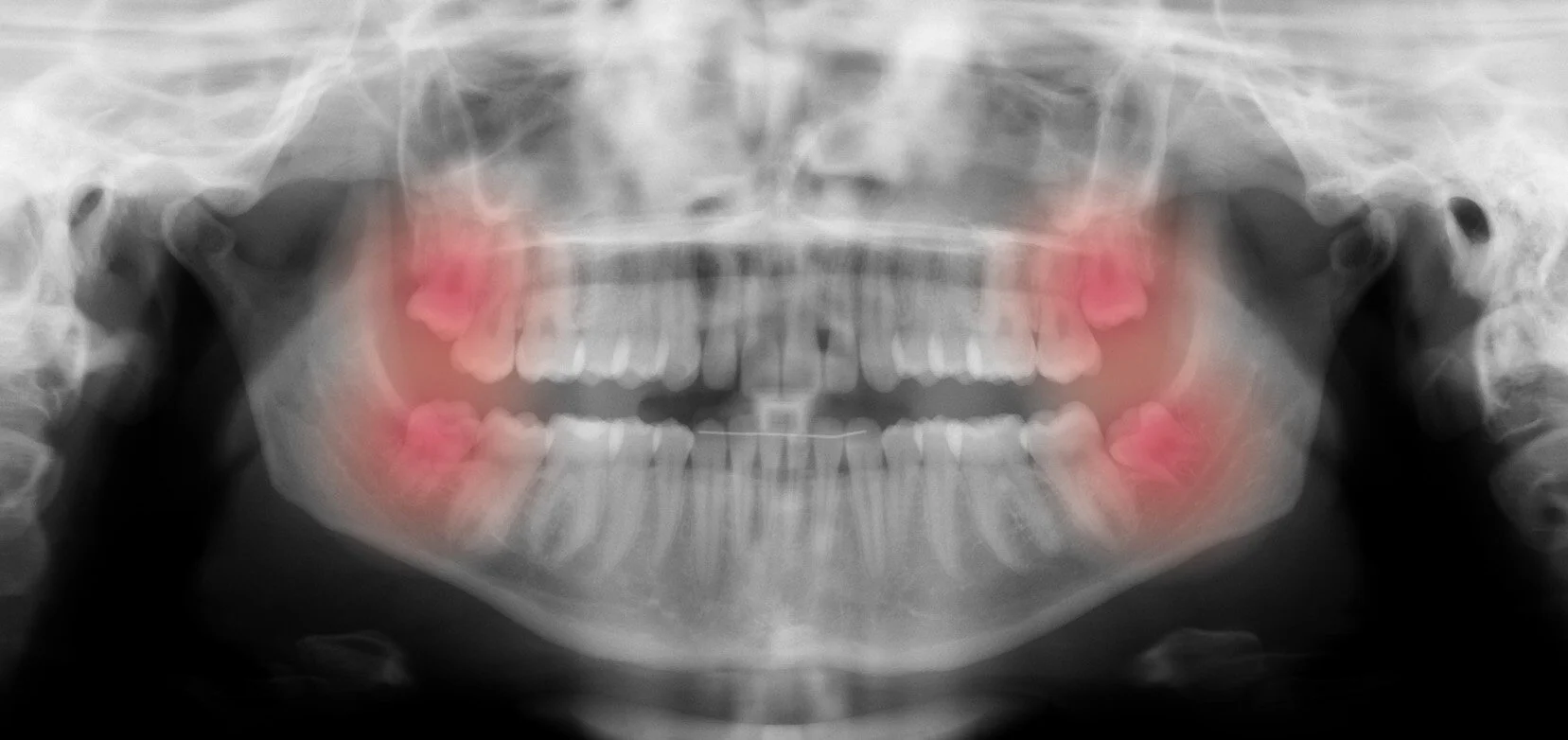
Today, however, these teeth are often more of a liability than an asset. Up to 70–80% of people experience at least one impacted or problematic wisdom tooth. (1) That’s because our jaws have literally become smaller over time, leaving little or no room for those last molars to emerge properly.
Ancient Diets, Bigger Jaws
Tens of thousands of years ago, humans had larger jaws and heavier chewing muscles. Their diets were unprocessed, rough, and required a lot of grinding. Chewing hard foods wasn’t just for nourishment, it was a form of daily exercise for the jaw.
All that chewing did something important: it stimulated jaw growth and helped align the teeth properly. Children who grew up gnawing on tough, fibrous food developed wide dental arches with ample room for all 32 teeth, including the wisdom teeth that emerged in early adulthood.
But there was another factor at play — tooth wear.
How Tooth Wear Created Space for Wisdom Teeth
Before toothbrushes and modern hygiene, ancient humans experienced much more tooth wear. As people chewed coarse foods, the enamel gradually wore down, especially between the teeth. This natural grinding caused a process called mesial drift, where teeth subtly moved forward over time.
As teeth migrated slightly toward the front of the mouth, extra space opened up at the back, creating the perfect gap for wisdom teeth to erupt without resistance.
So, between the larger jaw size and constant forward tooth movement, there was usually room for third molars to emerge naturally. Impacted or crowded wisdom teeth were likely rare.
Modern Life: Softer Diets, Smaller Jaws
Fast forward to today, and our diets couldn’t be more different. Instead of tough meats and raw roots, most modern humans eat soft, processed foods that require minimal chewing. From mashed potatoes and pasta to smoothies and cereal, we’ve traded texture for convenience.
This shift has had major consequences on jaw development. During childhood and adolescence, chewing activity helps stimulate bone growth in the jaw. When that stimulus is reduced, the jaw grows smaller and narrower.
Modern studies comparing hunter-gatherer populations with industrialised societies show that those who eat tough, fibrous diets tend to have broader jaws and fewer dental crowding issues. Meanwhile, people raised on soft, refined diets often have smaller jaws and misaligned teeth — and far more wisdom tooth impactions.
Why Wisdom Teeth Don’t Fit Anymore
Even though our jaws have shrunk, our teeth haven’t changed much in size. Evolution doesn’t move that quickly. So now, many people have 28 teeth comfortably fitting into a jaw that was once designed for 32.
When the third molars try to erupt in this limited space, several problems can occur:
The wisdom tooth gets trapped under the gum or bone because there’s no room for it to emerge. This is the most common issue and can cause swelling, pain, and infection.
Sometimes, a wisdom tooth breaks through the gum only partially. This leaves a flap of gum tissue that easily traps food and bacteria, leading to inflammation and infection (known as pericoronitis).
As the wisdom tooth pushes forward, it can crowd neighbouring teeth, undo orthodontic work, or create bite misalignment.
In rare cases, an impacted tooth can form a cyst, damage nearby roots, or erode jawbone.
A Mismatch Between Evolution and Modern Living
From an evolutionary perspective, the human mouth hasn’t yet caught up with modern life. Our ancestors lived and evolved under conditions that demanded heavy chewing. Evolution fine-tuned our dentition accordingly — giving us 32 teeth and a strong jaw.
But in just a few thousand years, our environment and eating habits have changed dramatically. We cook, soften, and process almost everything we eat. That change happened far too quickly for evolution to reduce the number of teeth or adjust jaw size accordingly.
This mismatch — between our biology and modern lifestyle — is why wisdom teeth remain problematic today.
Some people have already begun to show evolutionary adaptation: around 20–35% of people are born without one or more wisdom teeth. But for most of us, they still develop, and the lack of space means trouble.
The Role of Chewing in Jaw Development
It’s not just about evolution — jaw growth during childhood is highly responsive to environmental factors, particularly chewing.
Studies on children who regularly eat chewy, fibrous foods (like whole vegetables and meats) show better jaw width and alignment than those who primarily eat soft foods. The mechanical force of chewing helps shape the facial bones and stimulate growth in the lower face.
This means our modern soft diets aren’t just a convenience problem — they may actually limit the natural development of the jaws in growing children, predisposing them to dental crowding and impacted wisdom teeth later in life.
Why Not Everyone Has Wisdom Teeth Problems
Interestingly, not everyone experiences issues. A lucky few have enough jaw space for all 32 teeth to come through properly. Others never develop wisdom teeth at all due to genetic variation. Some populations (particularly in East Asia and parts of Africa) have higher rates of congenitally missing third molars.
Genetics plays a big role in whether you’ll have wisdom teeth, how many will develop, and how large your jaw is. But for the majority of people, the combination of smaller jaws, less chewing, and limited space makes wisdom teeth problematic.
Why Not Everyone Has Wisdom Teeth Problems
Not necessarily. Wisdom teeth that grow in straight, fully erupt, and can be kept clean may never cause trouble. However, most dental professionals agree that impacted or partially erupted wisdom teeth should be monitored closely, as they can cause infection, decay, or bone damage later.
The decision to remove them depends on several factors:
- Whether they’re causing pain or infection
- The position and angle of the teeth
- Risk of damage to nearby teeth or nerves
- The patient’s age (extractions tend to be easier and heal faster in younger adults)
Early assessment — usually with an X-ray in the late teens — can help determine whether removal is likely to be necessary.
What Happens If Impacted Wisdom Teeth Are Left Alone?
Sometimes, people delay or avoid removing wisdom teeth because they aren’t painful yet. However, problems can develop silently under the surface.
Possible complications include:
- Gum infection: trapped food and bacteria around a partially erupted tooth.
- Decay: wisdom teeth are hard to clean properly, making cavities common.
- Damage to second molars: impacted teeth can press against nearby roots or enamel.
- Cysts or bone loss: fluid-filled sacs can form around impacted teeth, slowly damaging the jawbone.
- Crowding: even asymptomatic wisdom teeth can exert pressure that shifts other teeth.
In short, no symptoms doesn’t always mean no problem.
Are We Still Evolving Out of Wisdom Teeth?
There’s some evidence that humans are gradually evolving to have fewer teeth. In many populations, the genetic code that controls tooth formation has changed, leading to more people being born without one or more wisdom teeth.
But evolution is slow. For now, wisdom teeth are still part of the package for most of us — a leftover from a time when they were useful, not troublesome.
Can Modern Habits Help Prevent Problems?
While we can’t reverse jaw shrinkage overnight, there are some habits that can promote better jaw health, especially for kids:
- Encouraging chewing: Foods that require effort — like crunchy fruits, raw vegetables, and meats — help stimulate jaw growth.
- Avoiding over-processed foods: Diets full of soft, mushy foods don’t provide enough resistance to develop strong jaw muscles.
- Good oral hygiene: Regular brushing, flossing, and dental check-ups keep wisdom-tooth areas clean.
Early evaluation: Monitoring development during the teenage years can prevent bigger issues later.
The Bottom Line
Wisdom teeth cause so many problems today because our modern lifestyle has outpaced our biology. Our ancestors needed them — we don’t. They evolved in a world where humans had large, powerful jaws, wore down their teeth through constant chewing, and naturally made room for those last molars.
But now, our smaller jaws and soft diets have created a perfect storm: teeth that still develop but no longer have space to grow. The result? Impacted wisdom teeth, infections, crowding, and the near-universal experience of wisdom-tooth removal.
So next time someone mentions their sore jaw or upcoming extraction, remember — it’s not bad luck. It’s a reminder of our evolutionary past colliding with our modern way of life.
Our ancestors may have had bigger problems — but at least their wisdom teeth weren’t one of them.